Basilica of St John - Ephesus
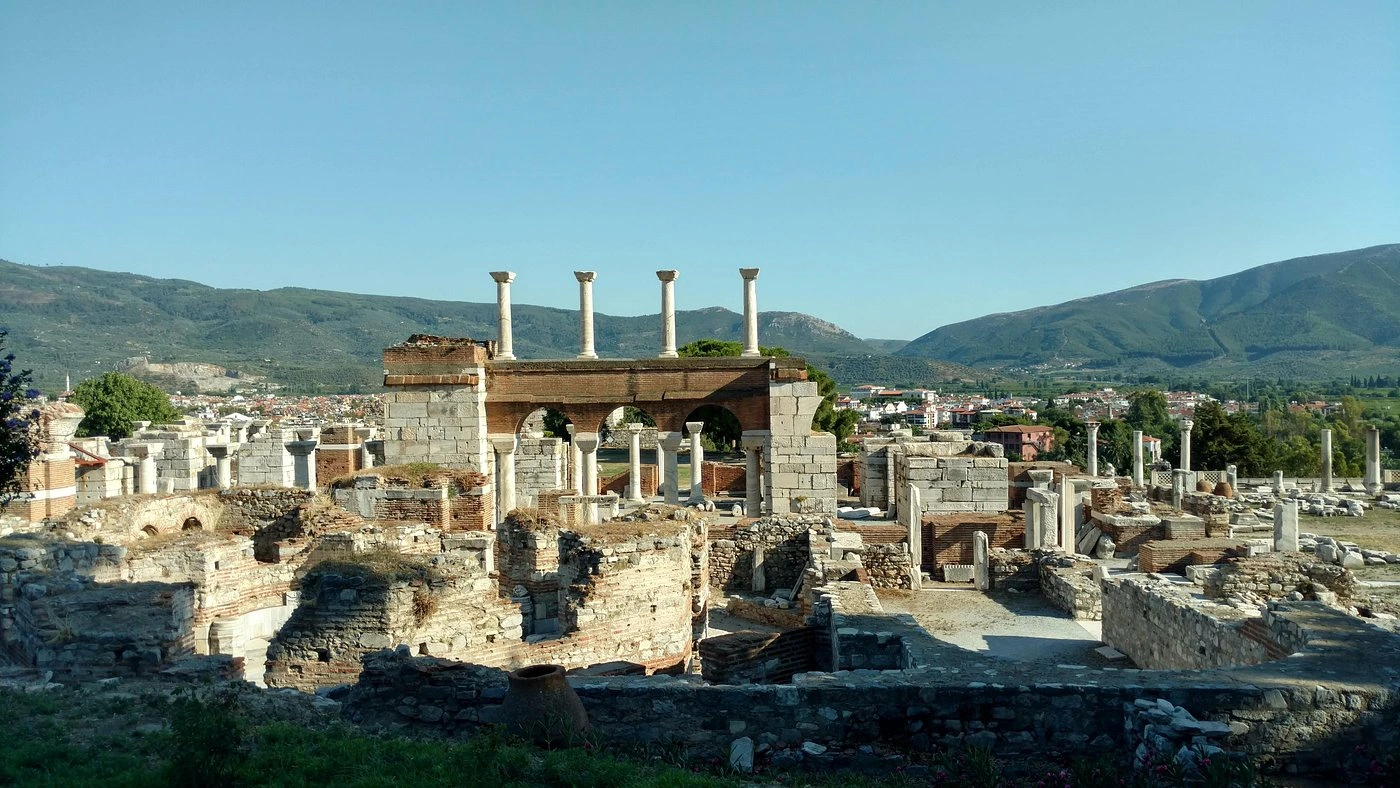
The Basilica of St. John – Ephesus stands on Ayasuluk Hill as a sacred monument of early Christianity, believed to be built over the tomb of Saint John the Apostle, the guardian of the Virgin Mary. It reflects the spiritual bond between Ephesus, Mary, and the foundations of Christian faith.
Saint John the Apostle and His Final Years in Ephesus
The Basilica of St John Ephesus stands as one of the most significant early Christian monuments in Asia Minor.
Saint John the Apostle occupies a unique position in early Christian history, theology, and tradition. As one of the Twelve Apostles and traditionally identified as the author of the Gospel of John, the Epistles of John, and the Book of Revelation, his influence extends far beyond his lifetime. Unlike most apostles, Saint John is believed to have lived to old age, continuing his ministry well into the late first century.
According to early Christian sources, Saint John settled in Ephesus after the events of the Crucifixion and Resurrection. At the time, Ephesus was one of the most important cities of the Roman Empire in Asia Minor—a crossroads of culture, philosophy, and religion. Saint John’s presence transformed the city into a center of Christian teaching, leadership, and spiritual authority.
Ephesus provided both safety and opportunity. Its distance from Jerusalem offered protection during periods of persecution, while its cosmopolitan population allowed Christian teachings to spread widely. From here, Saint John guided early Christian communities, defended doctrinal truth, and helped shape the theological foundations of Christianity.
The Basilica of St. John and Ayasuluk Hill
The Basilica of St. John stands on Ayasuluk Hill, overlooking the ancient city of Ephesus. Built in the 6th century during the reign of Emperor Justinian I, the basilica was constructed over what tradition holds to be the burial site of Saint John the Apostle.
Unlike many churches dedicated symbolically to saints, this basilica was designed as a monumental structure marking a physical tomb. Its cruciform design, marble columns, and imposing scale reflected both imperial patronage and deep theological significance. The choice to build such a basilica here reinforced the belief that Saint John’s earthly journey concluded in Ephesus.
Over centuries, the site became one of the most important pilgrimage destinations in the Christian world. Pilgrims traveled from across the Byzantine Empire to pray at the tomb of Saint John, believing the location carried spiritual grace, healing, and apostolic authority.
Saint John and the Virgin Mary: A Sacred Bond
One of the most profound elements of Saint John’s legacy is his connection to the Virgin Mary. According to Christian tradition, Jesus entrusted Mary to Saint John’s care during the Crucifixion. This moment established a spiritual relationship that would later define Ephesus as a uniquely Marian city.
Tradition holds that Saint John brought Mary to the region of Ephesus, where she lived under his protection. This belief forms the spiritual foundation connecting the Basilica of St. John with the nearby House of the Virgin Mary. Together, these sacred sites create a powerful theological narrative centered on guardianship, devotion, and continuity.
This bond elevated Ephesus beyond a historical city into a living spiritual landscape. For pilgrims, visiting the basilica is not only an encounter with Saint John’s legacy but also a reflection on Mary’s presence and the early Christian community that surrounded her.
Theological Importance of Saint John’s Presence in Ephesus
Saint John’s time in Ephesus was not merely pastoral—it was theological. The city became a place where early Christian doctrine was clarified and preserved. His teachings emphasized divine love, truth, and the spiritual identity of Christ, themes that later became central to Christian theology.
The Gospel of John, often described as the most theological of the four Gospels, reflects a mature reflection on Christ’s nature and mission. Many scholars associate its composition or final form with the Ephesian period of Saint John’s life. This connection further elevates the city’s importance in Christian intellectual history.
By anchoring doctrine in lived experience and apostolic authority, Saint John helped unify early Christian belief at a time when theological divisions were emerging. Ephesus thus became a stabilizing center for orthodoxy in the early Church.
Pilgrimage, Memory, and Sacred Continuity
Throughout history, the Basilica of St. John has served as a focal point of pilgrimage. Even after earthquakes and invasions led to its partial ruin, the site retained its spiritual significance. Medieval travelers described visiting the tomb, praying for guidance, and reflecting on the apostolic era of Christianity.
Today, visitors walk among the remains of the basilica with a sense of reverence rather than spectacle. The ruins invite contemplation—of faith carried across centuries, of teachings preserved through adversity, and of a city that once shaped the spiritual direction of the Christian world.
For many pilgrims, standing on Ayasuluk Hill is an encounter with continuity. The physical stones connect modern believers to the earliest generations of Christianity, offering a tangible link to apostolic tradition.
Saint John’s Enduring Legacy in Christian History
Saint John’s legacy is not confined to scripture or architecture. His influence continues through theology, liturgy, and spiritual reflection. The Basilica of St. John stands as a testament to this enduring impact, reminding visitors that Christianity’s foundations were shaped not only by events, but by places and people who carried faith forward.
Ephesus, through Saint John’s presence, became more than a city—it became a spiritual anchor for Christian history. The basilica remains a silent witness to this legacy, inviting each generation to rediscover the depth of early Christian faith.
Learn more about the sacred history, miracles, and pilgrim traditions of the House of the Virgin Mary (Meryem Ana Evi) in Ephesus, Türkiye — a revered Christian site where visitors collect holy water, light candles, and leave prayers on the Wishing Wall.
Visitors who explore the Holy Water of the House of the Virgin Mary often continue their spiritual journey by lighting a candle and leaving a wish on the Wishing Wall . These sacred traditions — light, word, and water — reflect the enduring faith and spiritual heritage connected to Ephesus and early Christianity.
For additional historical background and scholarly context, visitors may also consult the official Wikipedia article on the House of the Virgin Mary .